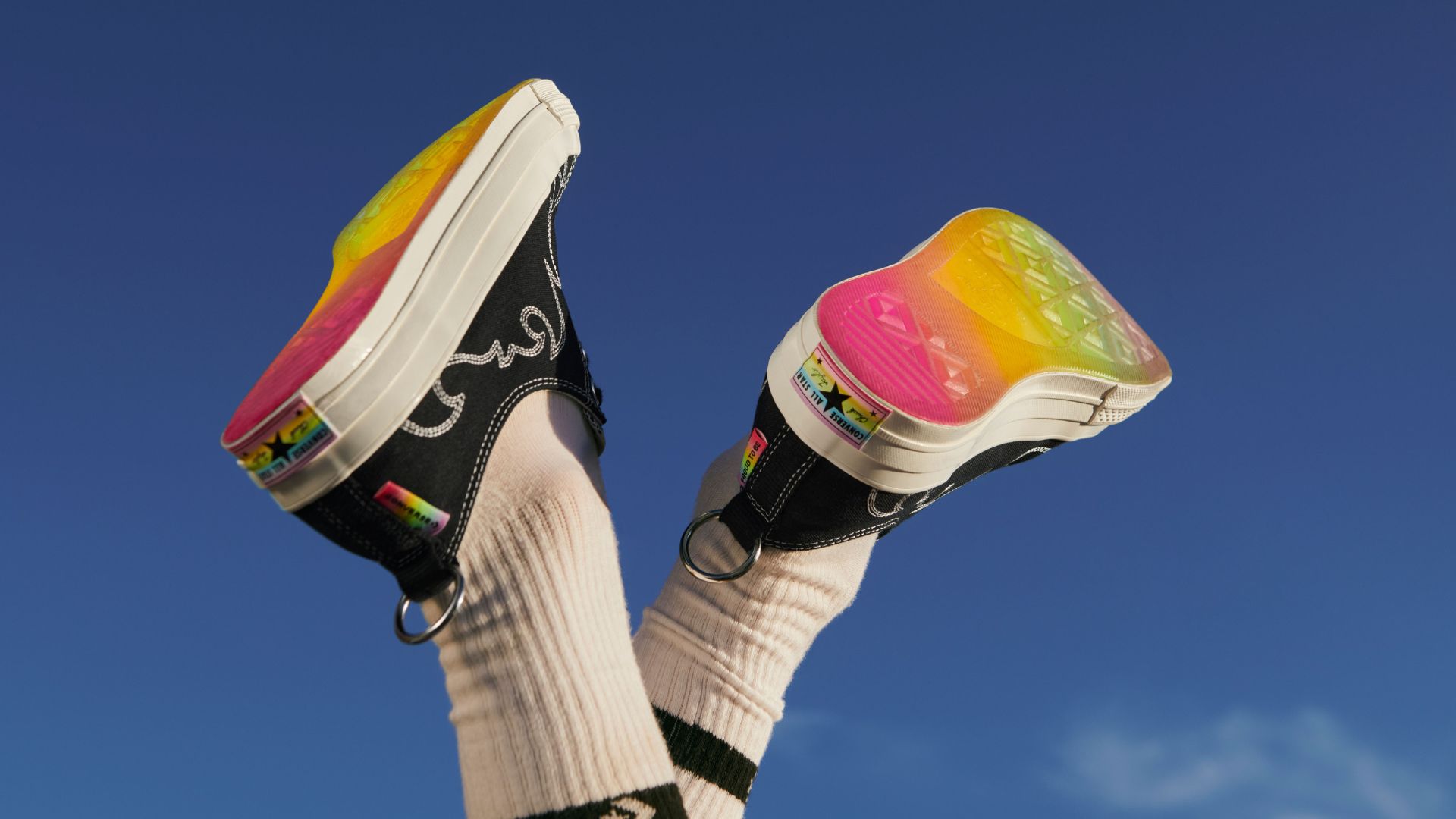
Celebrating its tenth annual Pride campaign, Converse is recognising those who are pushing boundaries for the LGBTQIA+ community to build a future where everyone can unapologetically be their fullest selves.
Boundless self-expression is part of Converse’s DNA – especially as it relates to creating safe spaces for the full spectrum of queer identities and experiences. To that end, Converse is proud to continue its ongoing commitment to the LGBTQIA+ community through its social and community partnerships with non-profit organisations that create spaces and opportunities where LGBTQIA+ and gender-expansive youth can learn, develop, and thrive.
Converse’s global support of the It Gets Better Project continues as they harness the power of the internet to create a community and show young LGBTQIA+ people that it does get better.
Understanding the importance of self-expression as a way to pave the path forward, Dan Savage (He/Him), Founder of ItGets Better Project, reflects on where he feels he can fully express himself.
“If I had to pick a place, I would pick my own front porch. In the summer, my husband’s boyfriend makes the most amazing cocktails, and we sit on the front porch steps as neighbours walk by. I remember what it was like being gay when I first came out four decades ago. Just being as gay as we are, on our front porches together, while being seen, known, and safe feels like a miracle.”
For this year’s Pride campaign, Converse enlisted photographer Cully Wright (He/Him) to capture the campaign imagery, whose work embodies the meaning of creating space. As a self-described romantic, Wright focuses on representing the various emotions of the queer experience to not only provide exposure to the community but also demonstrate the expansiveness of humanity and joy.
“When we create a safe space to fully express who we are, we allow others to do the same. That’s the goal,” said photographer Cully Wright. “As I keep growing, I want to inspire people and evoke emotions. I want to tell stories and give people the space to feel. I think the more diversity showcased in art, entertainment, and media, the more opportunities for acceptance.”