
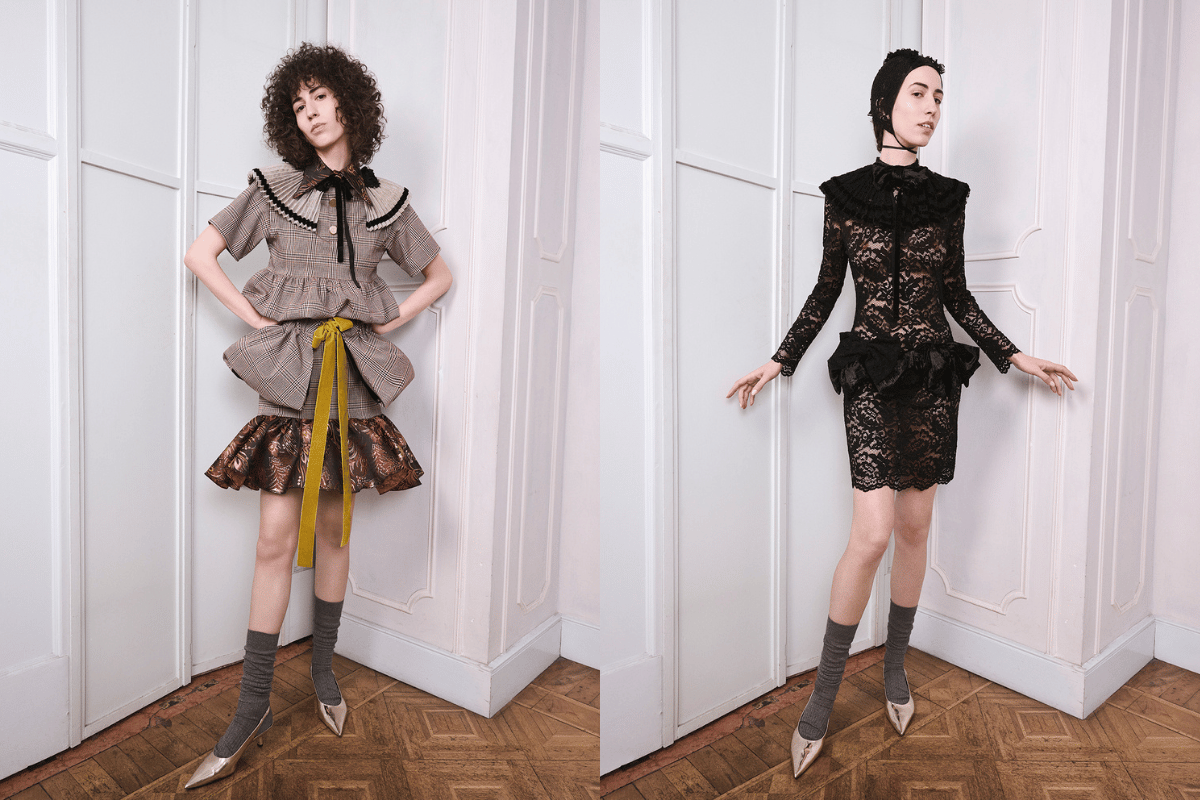
Italian designer Giuseppe Della Monica presented MAREA’s Autumn Winter 2026/27 collection, Poltronissima, at Milan Fashion Week, continuing the brand’s exploration of craftsmanship, sustainability and conceptual storytelling through contemporary fashion.
Founded in 2023, MAREA emerged from Della Monica’s vision of combining refined tailoring with environmentally conscious production. The label focuses on recycled materials and eco-friendly techniques, including water-based printing and largely plastic-free manufacturing processes. At the core of the brand is a design philosophy that transforms vintage or discarded materials into garments that feel both luxurious and responsible.
Della Monica trained at the Istituto Europeo di Design in Milan, where he was awarded Student of the Year, and first attracted industry attention when his graduate collection, Il Pranzo della Domenica, was recognised by Vogue Talents. He later refined his sartorial and creative approach, working with brands including Aquilano Rimondi and Fay, before launching MAREA as an expression of his own design vision.
For the FW26/27 season, that vision turns toward the world of theatre. With Poltronissima, Della Monica looks to theatrical costume archives not as a nostalgic reference but as a system for design. Stage garments originally created for performance are reinterpreted for everyday wear through an upcycling-driven process that cuts, shifts and reconstructs existing materials into new forms.
Silhouettes throughout the collection move between structure and fluidity. Dramatic volumes reminiscent of stage costumes are balanced with disciplined tailoring, while classic bourgeois elements are subtly destabilised. Drapery that appears effortless is in fact carefully engineered, revealing the technical precision behind the garments. Layering also plays a key role, echoing the complexity of theatrical dressing while maintaining a strong sartorial foundation.
Upcycling remains central to MAREA’s design process. Rather than acting as a decorative sustainability statement, the reuse of materials functions as a creative methodology. Recovered fabrics are transformed and reactivated, often retaining traces of their previous life, inviting reflection on value, memory and permanence within fashion.
The colour palette reinforces the theatrical influence, drawing on deep reds, matte blacks and softened powder tones punctuated by metallic accents that evoke the reflections of stage lighting.
With Poltronissima, Della Monica also plays with the relationship between observer and performer. The collection reflects on the act of watching and being watched, suggesting that even the theatre audience plays a role in shaping the performance.


