
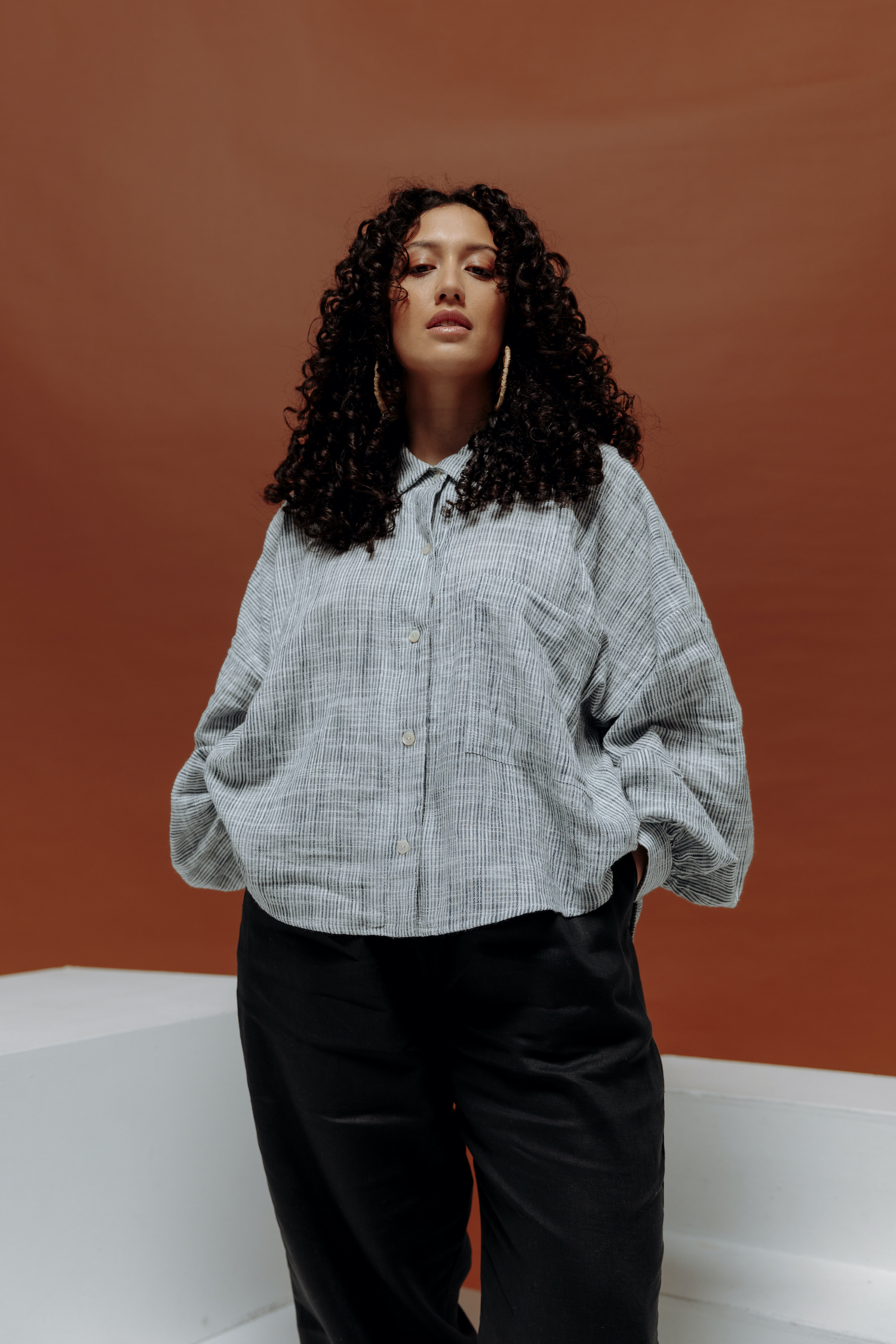


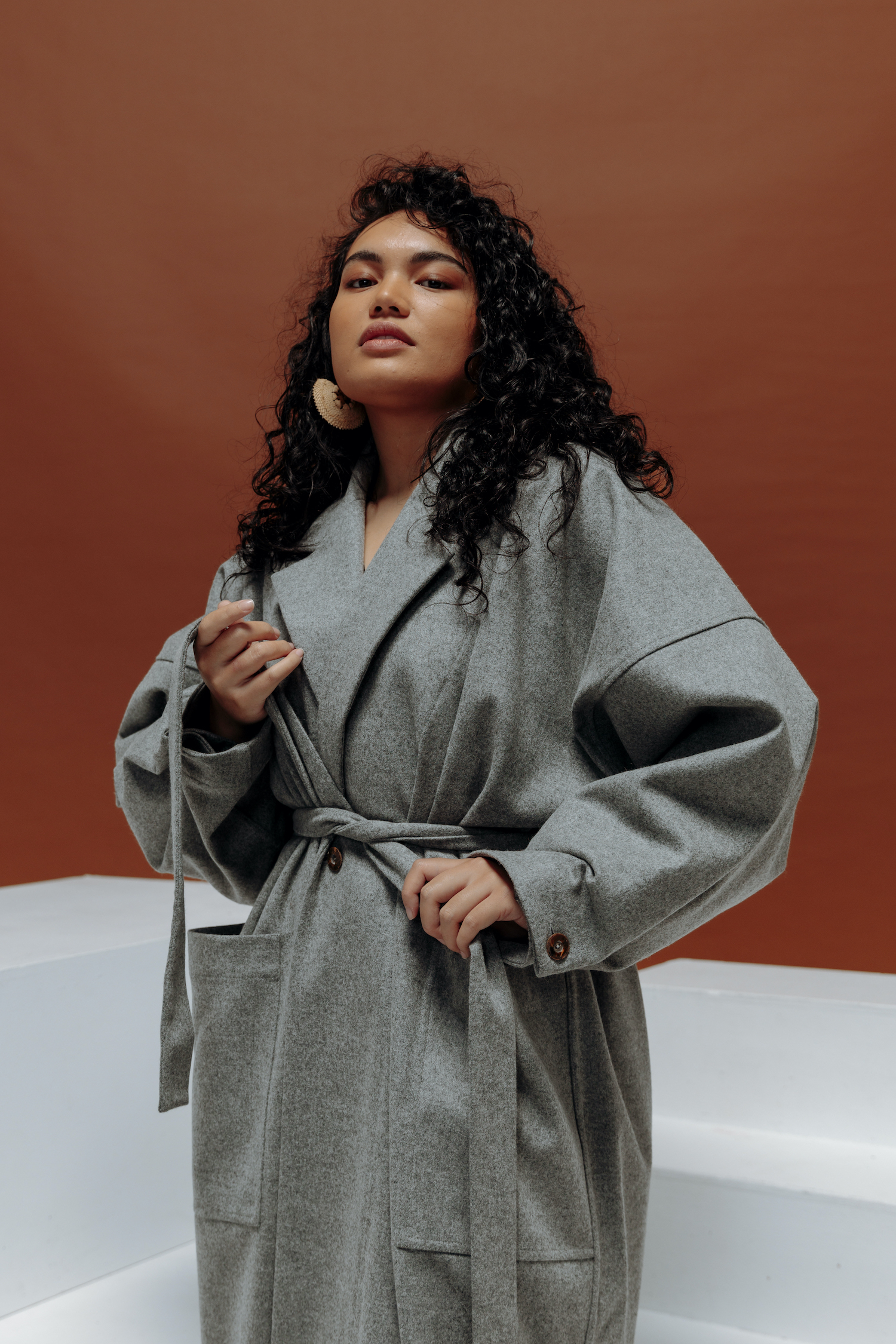
“I feel like I’ve arrived home when I put this dress on,” is one of the many praises Keva Rands has recieved for her label, Papa Clothing. She fills a unique part of the market with high-end, locally made, sustainable and inclusive designs that reference the Pacific Islands and their communities.

Keva Rands
After graduating from AUT in 2014, Rands joined a designer collective that allowed her to create the first prototypes for the Papa aesthetic. She designed part-time while holding down several jobs until building the first Papa website in 2017. The brand has been steadily developing ever since, allowing Rands to run the label full-time.
Inspiration for Papa pieces comes from the many females in the designer's family - Pasifika women with various body shapes and sizes. Her clothing is made to suit everyone. Rands’ family is also incredibly eco-conscious. Her parents founded Ecostore in the 90s, so further inspiration is drawn from sustainability and natural textiles.
“My community’s response to the designs was really encouraging, and I was moved when people would say things like ‘I feel like I’ve arrived home when I put this dress on’ and ‘These fabrics are so comfortable, and the designs don’t make me feel conscious of my body.’ I realised I had a unique and special opportunity with these clothes to help us feel comfortable and seen.”
The Papa community is a creative one, and often customers of larger dress sizes - the most sold size is Large. The ages range anywhere from 25 to 65, and usually, but not exclusively, are of Pacific descent. Rands customers are also almost always conscious consumers who like supporting indigenous designs.
What sets Papa apart is that it is the lived experience of a designer in the Pacific, eco, and queer communities of New Zealand. Community is at the forefront of Rands' decision-making, always ensuring inclusivity.
Papa clothing is released in waves instead of collections. Steering away from seasonal releases and a never-ending flow of new clothing, Papa only has a few per year. It works for the trans-seasonal linens and cottons Rands uses and a market that is all about slow fashion.
“I really admire Gabriella Karefa-Johnson from Vogue USA. Her personal style and work as a stylist is stunning and really shows an alternative to the thin, white beauty we’ve been fed for so long. Another person I look up to in the fashion realm is Aja Barber. She is always making links between capitalism, colonialism and exploitation within the fast fashion industry. She is very articulate on these matters while still having a sense of humour and sometimes being a bit goofy.”
For the budding designer, Rands suggests making your own mark on the industry. Don’t feel like you need to follow the same systems as other brands, collaborate whenever you can and take plenty of free business courses, as fashion design is a very small part of running a label.
As of right now, Papa is on a slow but steady growth trajectory. Within the next five years, Rands hopes to spread the ready-to-wear waves to more stockists across the country and establish a flagship store in Auckland. She has seen the growth of inclusivity and sustainability from when Papa first started and hopes to see it become a compulsory characteristic of modern labels.