
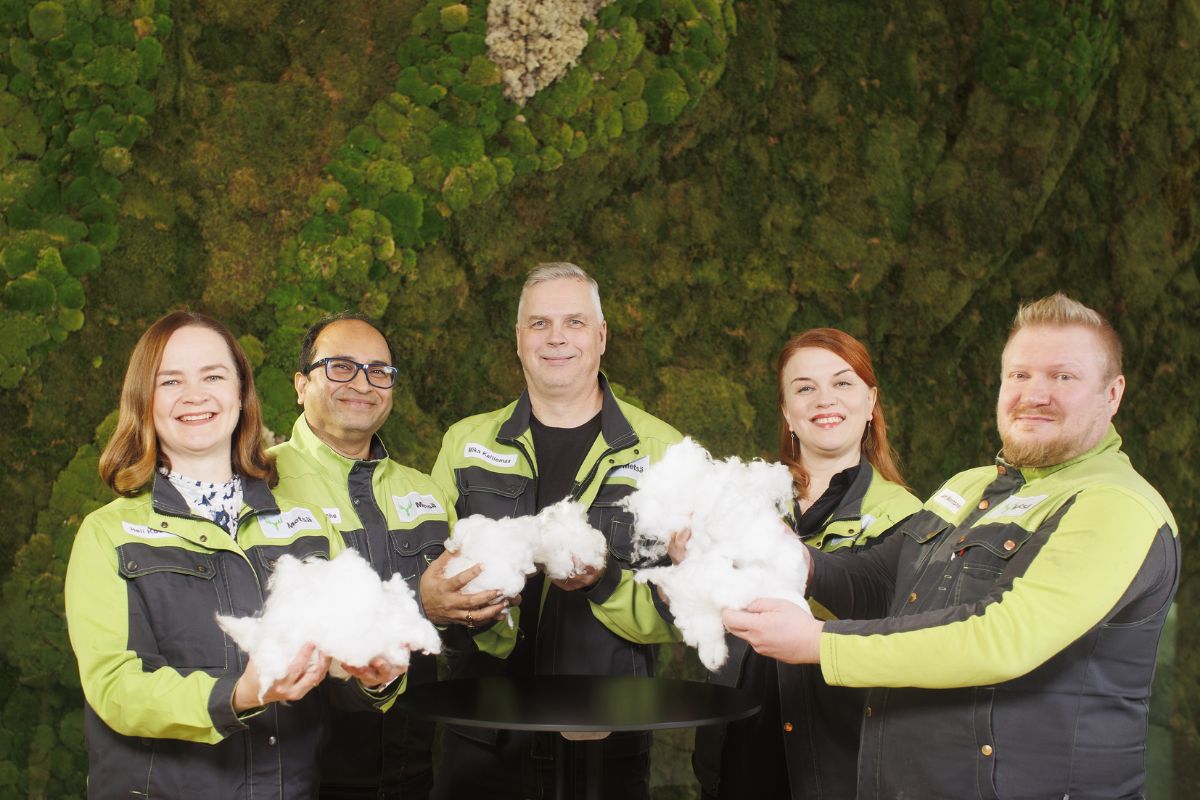
Metsä Group's Kuura textile fibre, derived from the softwood pulp of Metsä Group, has garnered significant recognition for its sustainability efforts. The 'Green Shirt' rating, awarded for the third consecutive year, is a testament to the environmentally friendly attributes of Kuura, as assessed by the well-respected Hot Button Ranking by Canopy, a Canadian not-for-profit environmental organisation.
The Kuura textile fibre, produced at the Äänekoski bioproduct mill, excelled in sustainability with a 'Green Shirt' rating, signifying a risk-free, transparent supply chain and traceable raw materials. This distinction positions Kuura as a preferred choice for leading brand owners committed to environmental sustainability, with a focus on sourcing fibres from 'Green Shirt' producers.
In a market expected to grow from approximately US$42 billion in 2022 to US$66 billion by 2030, Metsä Group's Kuura concept stands out with a vision to provide the global textile and non-woven industries with a new fibre with a significantly reduced environmental footprint. The ongoing research and development phase, a collaboration between ITOCHU Textile Company and Metsä Group's innovation company Metsä Spring, has led to the creation of sustainable outfits and cutting-edge artwork, aligning with the future of sustainable fibres.
Niklas von Weymarn, CEO of Metsä Spring, emphasised the strict criteria of the Hot Button Ranking and the evolving sustainability landscape. The continuous recognition as a 'Green Shirt' provider for Kuura reflects progress in sustainability matters, attracting interest from leading sustainable fashion houses.
Kuura's sustainability extends beyond rankings. ISO standardised Life Cycle Assessment (LCA) evaluations indicate lower greenhouse gas emissions in large-scale production compared to existing bio-based textile and polyester fibres. The Global Warming Potential category ranks Kuura as best in class, thanks to integrated production within the pulp unit, ensuring a favourable total energy requirement with renewable energy sources.
Moreover, Kuura aligns with the EU's plans for textile circular economy regulations, being 100 percent recyclable and naturally biodegradable. Its production, especially using wood from Nordic forests, avoids competition with food production and eliminates the need for irrigation water, fertilisers, or pesticides.
The unique backward traceability of Kuura connects back to over 90,000 Finnish forest owners associated with the Metsä Group. All wood used for Kuura is sourced within a 100-km radius from the bioproduct mill and the Kuura mill.
As Metsä Spring advances with Kuura's test production in the Äänekoski demo plant, the simultaneous development of a technical concept for a potential commercial textile fibre mill integrated into a modern bioproduct mill underscores the commitment to industrial efficiency in textile fibre production.