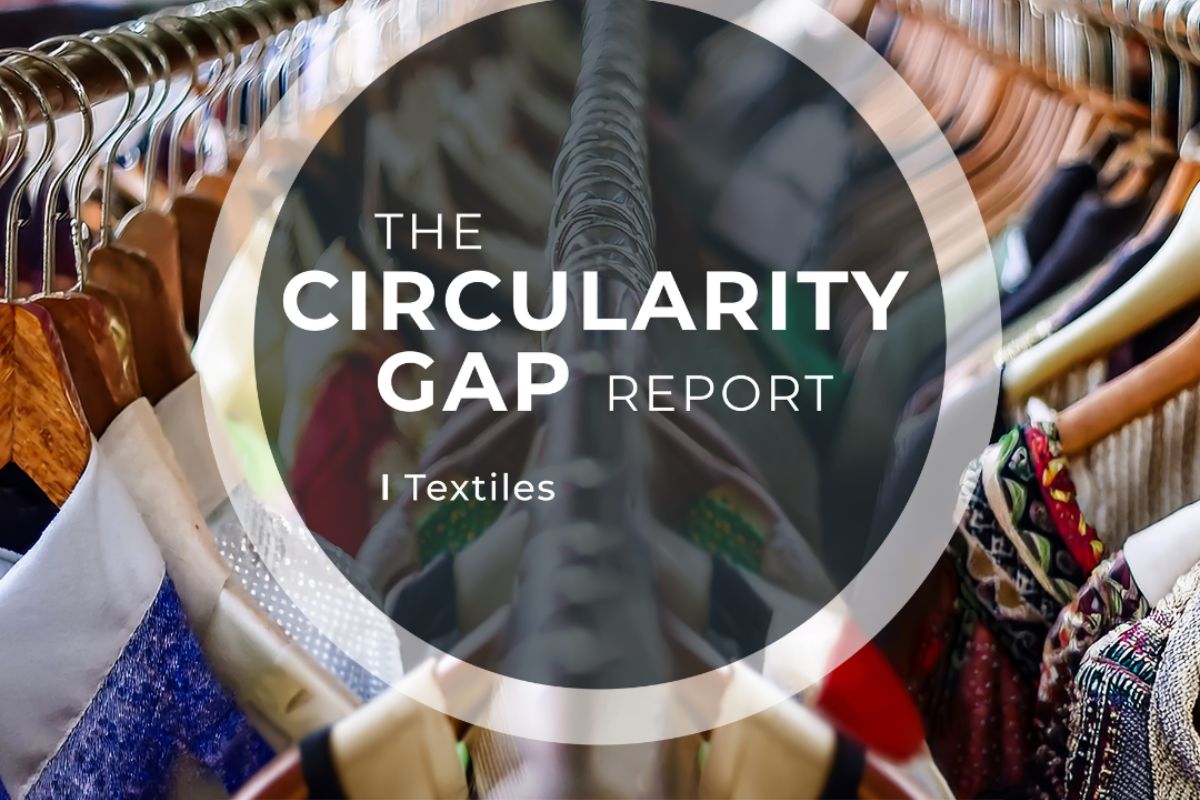
A new report, authored by Circle Economy and funded by the H&M Foundation, provides an in-depth analysis of circularity within the clothing and textile industry. The Circularity Gap Report Textiles calls for urgent action to reduce the sector’s environmental impact by embracing circular economy principles, including reuse, recycling, and slow fashion.
Released by impact organisation Circle Economy, the report presents striking data: of the 3.25 billion tonnes of materials consumed by the textile sector annually, only 0.3 percent comes from recycled sources. Meanwhile, 70 percent of the industry’s raw materials are derived from fossil-fuel-based synthetic fibres. The report emphasises that significant progress towards a more circular and sustainable industry can be achieved by prioritising renewable and recycled fibres, increasing garment durability, localising supply chains, and reducing both production and consumption levels.
"We supported this report to provide the textile industry with actionable insights," said Christiane Dolva, Head of Innovation, Research & Demonstration at the H&M Foundation.
"The report highlights the most impactful circularity efforts. While not a complete solution, circularity is a powerful tool for driving meaningful change. We hope these insights will support industry-wide transformation, benefiting both people and the planet."
The report outlines four key recommendations:
- Transforming the industry by reducing production volumes – addressing overproduction, reshaping production cycles, and cutting resource use.
- Expanding environmental priorities beyond carbon reduction – considering broader impacts, particularly on water ecosystems.
- Ensuring a socially just circular transition – focusing on decent work, fair wages, and improved working conditions.
- Coordinating action across science, technology, policy, and finance – fostering collective efforts to build a circular textile economy.
"The CGR Textiles is groundbreaking as the first in-depth analysis to measure circularity within the textiles sector," said Hilde van Duijn, Managing Director of Circle Economy Foundation.
"This report highlights the urgent need for solutions that transform the entire textile value chain toward a circular model. Only through concrete, scalable actions can the industry contribute meaningfully to a sustainable future."
The findings align with the H&M Foundation’s ongoing initiatives, such as the Global Change Award, which accelerates innovations that benefit both people and the planet, and Saamuhika Shakti, a programme that fosters inclusive circularity in collaboration with waste pickers. Moving forward, the H&M Foundation will use the report’s insights to guide its philanthropic efforts, ensuring targeted support for decarbonisation and circularity across the textile industry.
To access the Circularity Gap Report Textiles, visit circularity-gap.world/textiles
More news here.